
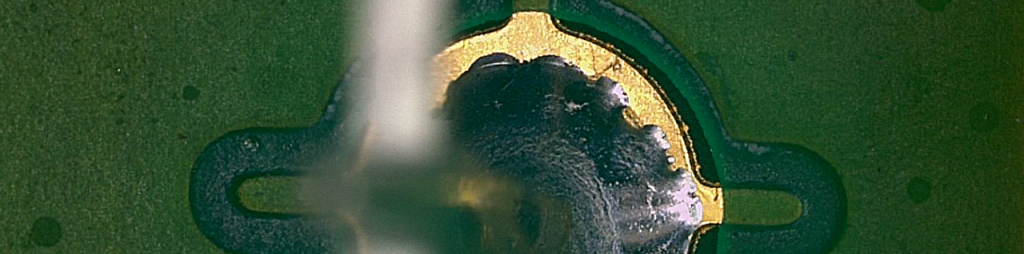
Right-first-time – How to optimize THT Soldering Processes without trial-and-error soldering.
Siemens validates how a Digital Process Twin can revolutionize THT soldering — turning months of prototyping into minutes of simulation.
The cost of Prototyping: Delays and Costly Design Iterations
In high-mix electronics manufacturing, optimizing solderability has long relied on physical prototypes. Each design spin and prototyping iteration can cost tens of thousands of euros and delay market entry by weeks or even months — especially when solder quality issues are uncovered late in the development process.
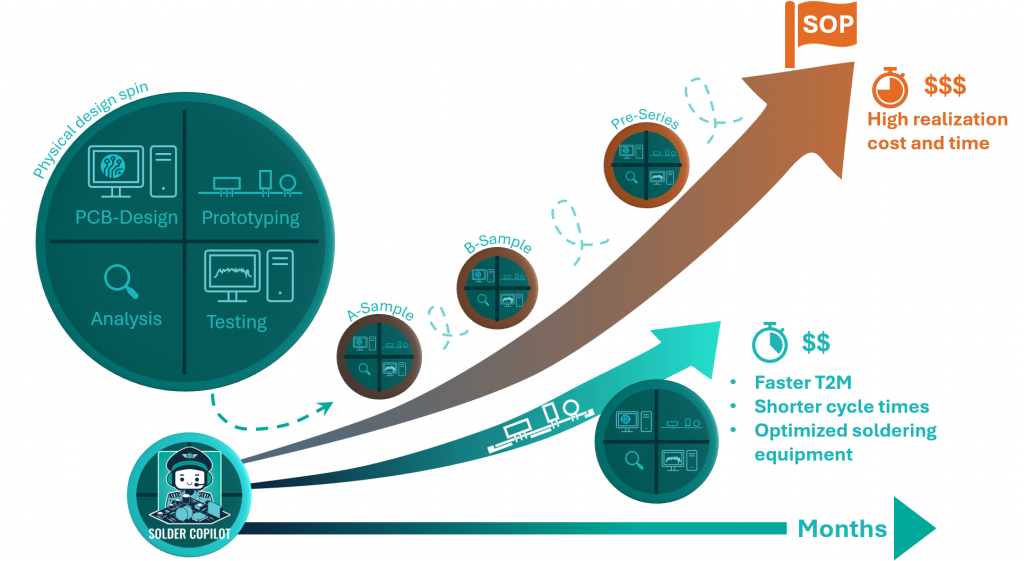
Traditionally in design verification, manual Design for Manufacturing (DfM) checks based on generic design rules (like clearance, copper area and pad size) don’t account for real-world process physics and its limitations [1, 2, 3].
As a result, process issues often emerge during process validation instead of being caught in design verification leading to late redesigns and additional production cost.
Simulation-Based DfM with the THT Solder Copilot
Together with Siemens Electronics Factory Erlangen GWE) — a motion control manufacturing site — we show cased our THT Solder Copilot, a hybrid data-driven and simulation-powered Digital Twin technology.
Instead of relying on rules of thumb, we used the digital twin of the THT soldering process to:
- Simulate solder joint behavior based on actual CAD data
- Evaluate thermal load, hole-fill risks, and the soldering process window
- Recommend optimized process parameters — nozzle, contact time, temperatures
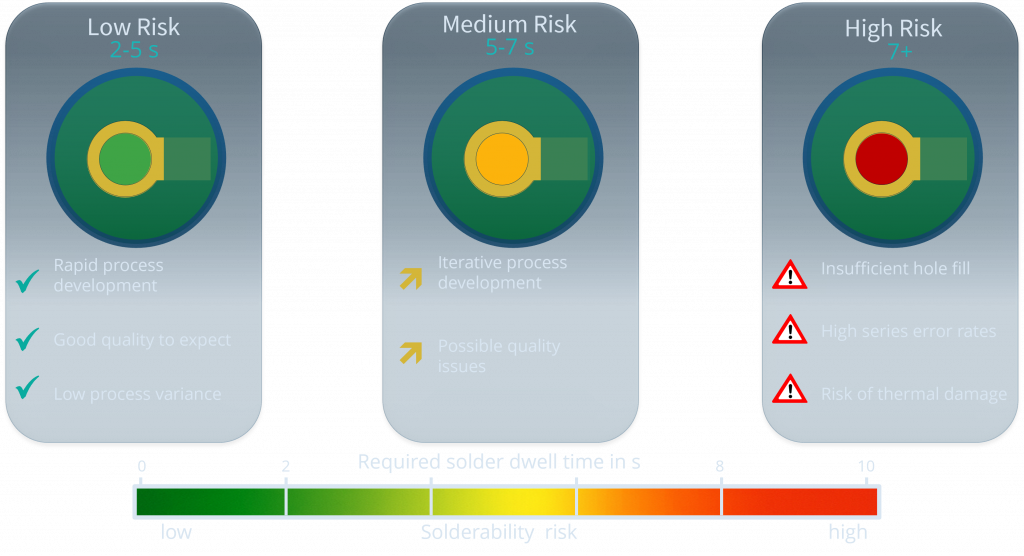
By doing so, the PCB design can be verified for solderability while taking the specific limitations of the THT process into account. In this way, software brings soldering expertise into the design stage and bridges the gap between the design and manufacturing domains. The result of the analysis is visualized as a traffic-light color overlay that is projected onto each individual solder joint, giving viewers valuable insights into subsequent THT soldering processes and potential risks.
This allows important insights for the user:
- ✅Detect critical and non-solderable THT joints before prototyping
- ✅Shorter cycle times
- ✅Reduce thermal stress on the PCB
- ✅Cut down unnecessary design and tooling loops
When such risks are displayed, interventions can be made early in the design phase—without spending money and time on prototype orders.
Markus Hermann, THT soldering expert Siemens AG:
„Our evaluation of Solder Copilot as a digital twin for THT soldering revealed promising opportunities to enhance DfM, streamline design reviews, and accelerate machine programming — offering a glimpse into how future production workflows could be transformed”
Siemens in Action: Digital Twin Validation Results
Using the Solder Copilot, we simulated solder joint behaviour for a complex high-power PCB from Siemens.
By means of this manufacturing risk assessment (MRA), we spotted challenging solder joints based on CAD data and thus predicted risk of insufficient hole fill for specific solder joints based on the process physics.
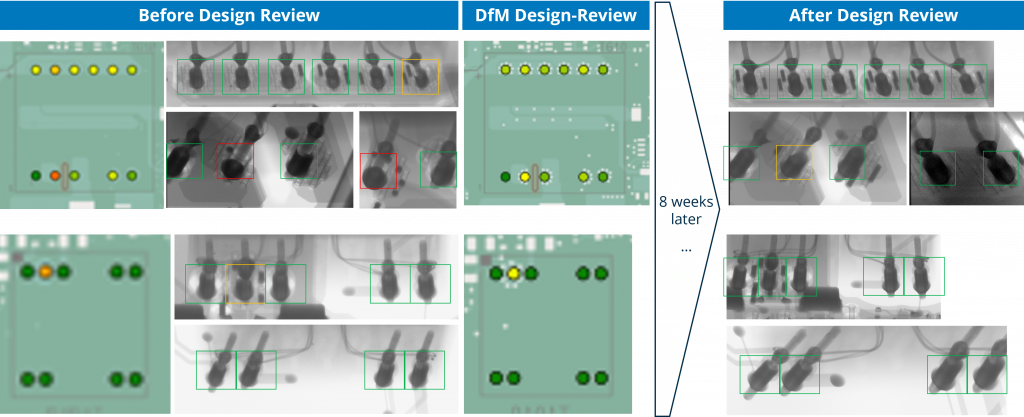
The chosen PCB layout included solder joints with known thermal challenge. As can be seen in the figure, these risks of the pre-review layout are highlighted by the digital twin accordingly.
The new layout after the design review, shows an improvement, which also resulted in improved soldering results. Hence, the Solder Copilot results gain valid and valuable insights. If the pre-review design would have been tested pior to manufacturing, the issues would have been detected successfully.
This validated the Copilot’s predictive accuracy and showed how simulation-based DfM can replace the first physical iteration.
This way checking solderability means bridging the gap between design and manufacturing, melting together PCB design and the physics of soldering processes in the Digital Twin. This enables next level DfM also known as „Manufacturing Driven Design“ (MDD), which strongly takes the manufacturing process constraints into account instead of relying on generic rules. [1, 2]
Hence, manufacturing driven design for THT is brought to life by Digital Process Twin Technology.
Business Benefits: Redefining DfM for THT – stop wasting time and money on iterations
This showcase is more than a technical success — it’s a paradigm shift in how DfM is done and a shift towards manufacturing driven design (MDD) which means an introduction of process physics into design.
- ✅ Design and process are no longer separate silos.
- ✅ Digital Twins replace months of prototyping with minutes of simulation.
- ✅ Product-specific process parameters make process setup faster, cheaper, and more reliable.
- ✅ Solder joint level optimization of soldering pallets based on the solderability
Tangible Gains for Siemens:
- ⏱️ Shorter Time-to-Market
- 💸 Fewer costly design iterations
- 📉 Reduced process risk before SOP
- 🔥 Minimized thermal stress and rework
- Design product specific soldering pallets tailored to the process physics on solder joints level.
What’s Next: From Pilot to Integration
Our vision:
- Make soldering machines intelligent – enabling the machine to suggest soldering programs and guide the operator for optimal soldering processes improving setup times, cycle time optimization and rework.
- Embed predictive solderability checks directly into the EDA and DfM Software — enabling DfM to become a real-time, design-integrated capability across global electronics operations.
📌Takeaways
✅ Digital THT Process Twin = the new gold standard for THT DfM
✅ Solder Copilot identifies critical joints from CAD — before prototyping
✅ Simulation-based parameter recommendations streamline setup and ensure quality
🚀 Ready to Replace Guesswork with Precision?
Don’t wait for your next soldering issue to appear on the shop floor.
Get in touch to learn how Solder Copilot can bring model-based DfM to your product development — and make quality predictable.
At DEEPTRONICS, we are uniquely equipped to provide this specialized service, helping you navigate the complexities of THT soldering and deliver high-quality electronics products.
Start Your Simulation-Based DfM Analysis Today
- Contact Us: Reach out to our team of experts for a consultation.
- Discover the Difference: Learn how our simulation-driven approach can enhance your PCB designs.
- Stay Ahead: Ensure your products meet the highest standards of quality and reliability.
References
[1] Manufacturing Driven Design leverages the intelligence within your PCB Design – Electronic Systems Design, November 20, 2023
[2] Patrick McGoff, Manufacturing Driven Design – Taking DFM to the Next Level – Electronic Systems Design, August 7, 2023
[3] Maya Shani, What’s new in Valor NPI v11.5 – Electronic Systems Design, June 17, 2022